
Delve Combat Guide: Controls, Dodging, Healing and Telegraphs
The Delve combat controls you need — dash with Q or Space — plus dodging fast skeleton attacks, healing in portal rooms and surviving telegraphed boss attacks.
Quick answer
Delve publishes one combat movement control: Dash on Q or Space — that's the input your fights depend on. Attack with the weapon you have equipped, and survive regular encounters by dashing out of fast enemy swings, taking fights slowly, and routing each run toward rooms with a portal, because a portal room is where you can heal.
- Dash: Q or Space — the combat-relevant input on Delve's official control list
- T opens the Inventory, B opens the Shop, H hides your Helmet
- No passive healing between fights in a dungeon run — damage carries forward
- The map shows the next room; a room with a portal is where you can heal
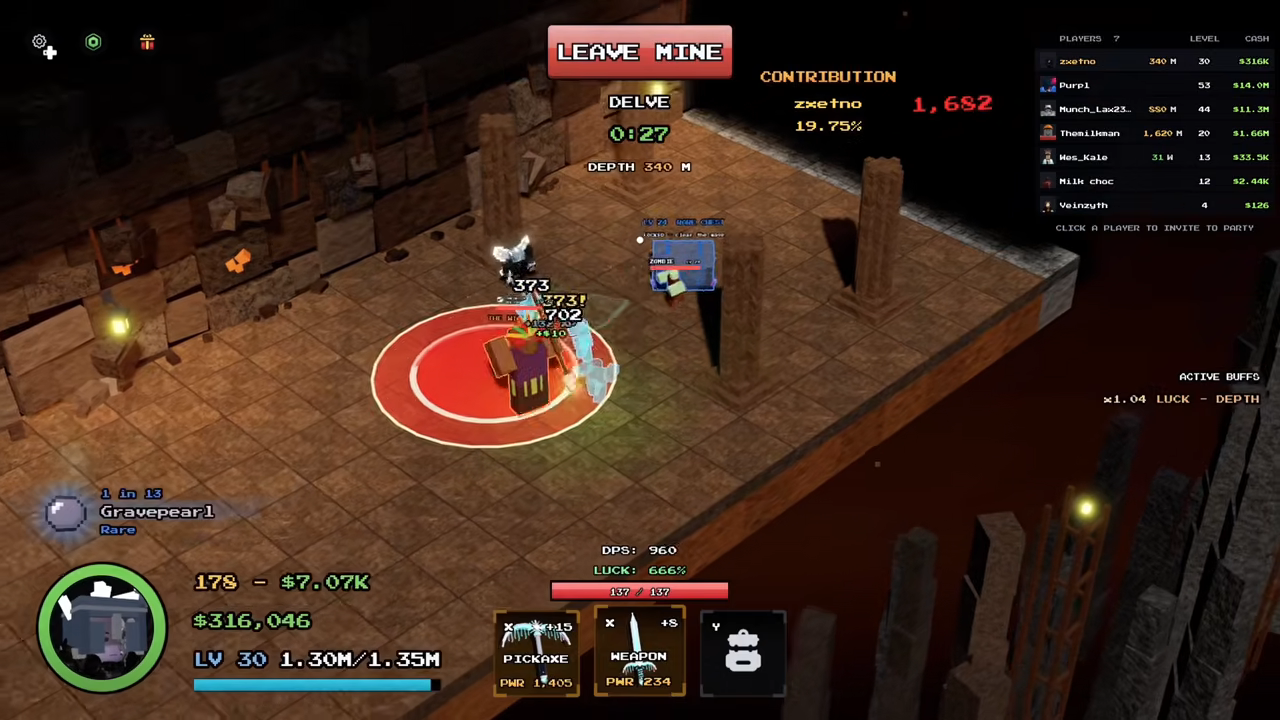
- Boss attacks telegraph as red circular ground danger zones — get out of them
The controls Delve gives you
Delve (by Treasure Goblin) lists exactly four default controls on its official game page:
| Key | Action |
|---|---|
| Q or Space | Dash |
| T | Open the Inventory |
| B | Open the Shop |
| H | Hide the Helmet |
Only the first row matters in a fight. T, B and H are convenience keys — two menus and a cosmetic toggle for your helmet — while the Dash on Q or Space is the movement tool combat is built around. Two things are worth knowing about this list: it does not spell out a separate attack input, so your equipped weapon is what does the hitting, and the official page supplies no rebinding information, so these are the defaults you start with. The full rundown of every input lives on the Delve controls page.
Dodging: dash is the core combat skill
Delve's movement takes a little getting used to, but one creator who ran the haunted cribs dungeons put it simply: dashing is the main thing you need to know for combat movement. That is because of what the early rooms throw at you — skeletons, and skeletons attack quite often. You always need to dodge, and dodging means tapping Q or Space to dash out of the swing.
The rhythm matters because health is not free (more on that below): every swing you eat in a skeleton room follows you into the next one. Treat the dash as your answer to anything fast, and go into fights expecting to move rather than stand and trade. For what else lives in each area, the Delve monsters guide has the rundown.
Healing: no passive regen, so route to portal rooms
In a dungeon run you do not passively heal between fights. Whatever a room costs you follows you into the next one, which is why careless fights carry forward. The creator of that haunted cribs run recommends attacking enemies slowly and taking your time if you don't want to die — picking which enemies you fight rather than charging into everything at once.
There is one exception, and it is the core of surviving a run: rooms with a portal. The map shows which dungeon room you are heading to next, some rooms contain a portal, and a room with a portal is where you can heal. So before you move on, look at the map and pick the route that takes you through a portal room when you are hurt. Because layouts are randomly generated every run, make this check each time — the healing room will not sit in the same place twice.
That loop is the survival plan for a whole dungeon run:
- Clear the current room slowly, choosing your fights.
- Check the map before moving on.
- If you are hurt, head for the room with a portal.
- Heal there, then continue deeper.
The Delve dungeon guide walks through the room-by-room crawl in more detail.
Boss attacks: read the red ground zones
Bosses announce their attacks differently: they telegraph with red circular danger zones drawn on the ground. You will see the red circle appear under a boss during a run, and the warning repeats in the endless Delve descent and the boss waves of the FROSTBITE mine — both telegraph with red circles. The Halloween event boss THE PUMPKIN COLOSSUS uses its own variant: red and white striped ground zones.
Whatever the pattern, the response is the same. A red zone marks where an attack is about to land, so when one appears under or near your character, move out of it — and the dash you use against skeletons is the tool for that too. Regular enemies punish standing still with frequent swings; bosses punish it with marked ground. The Delve bosses guide covers the bosses themselves.
Hit harder: weapons and upgrades
Surviving is easier when encounters end sooner. Delve has more than one weapon type — if you are tired of the sword, you can switch to a crossbow just by clicking equip. The crossbow puts out high damage, but it asks for constant input: you have to keep aiming and shooting instead of swinging.
One creator who tried both came away calling the crossbow the better weapon and recommends it over the sword. That is a single player's hands-on impression rather than a tested stat comparison, so treat it as a nudge rather than a verdict — both weapons clear content, and the real choice is whether you prefer swinging or concentrating on your aim. The Delve weapons guide goes deeper on the options.
Gear pushes the numbers further. Recorded gameplay from before the Abyss patch shows the Upgrade menu upgrading items with gold, with gems needed to push an item to grade 2 — so the gems you earn feed straight into more damage. The same footage shows each upgrade step listing what it changes — PWR, SPEED, CRIT and CRIT DMG — with a stated chance of success for that tier, so a higher grade is not guaranteed on every attempt, and an enchantment like Perfect Damage raising weapon damage by 50%. Delve is an alpha that patches often, so treat those exact costs and percentages as subject to change; the Delve gear upgrade guide explains the system in full.
Putting it together
Delve combat comes down to a short list of habits: keep Q or Space ready, because fast-attacking skeletons and red boss zones both punish standing still; take rooms slowly, since health does not refill between fights; and read the map every room, so a portal room — the one place you can heal — is never far away when you need it. If you are just starting out, the Delve beginner guide covers the road from your first swing onward.
Related Guides
Bosses & Telegraphs
Meet every confirmed boss with its location and attack telegraphs so no pattern surprises you.
Dungeon: Endless Descent
Understand the endless descent: how a dungeon run works, what scales, and when to leave.
Weapons: Types & Named
Compare every weapon type, see the named weapons, and learn how to obtain the ones you want.